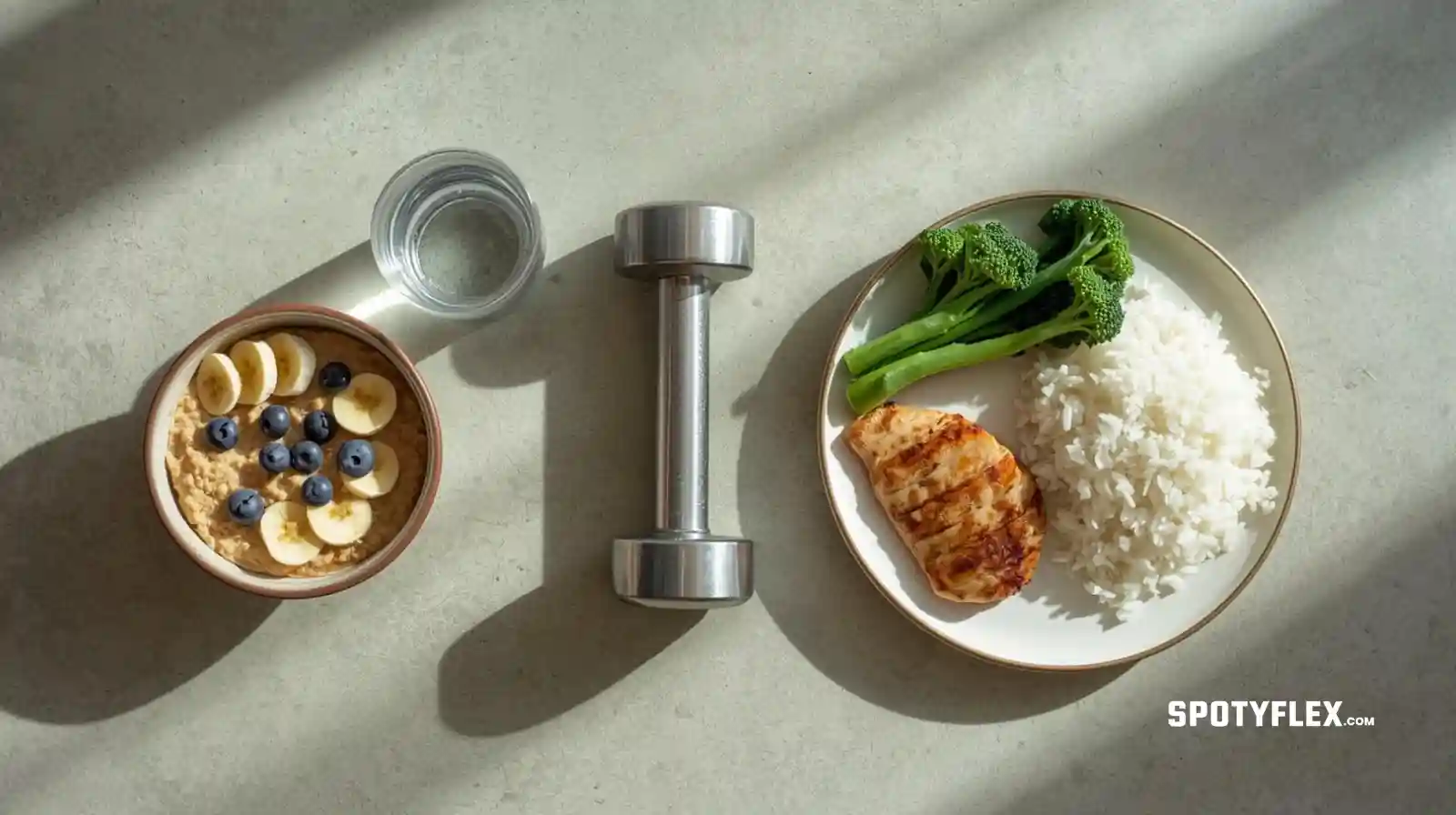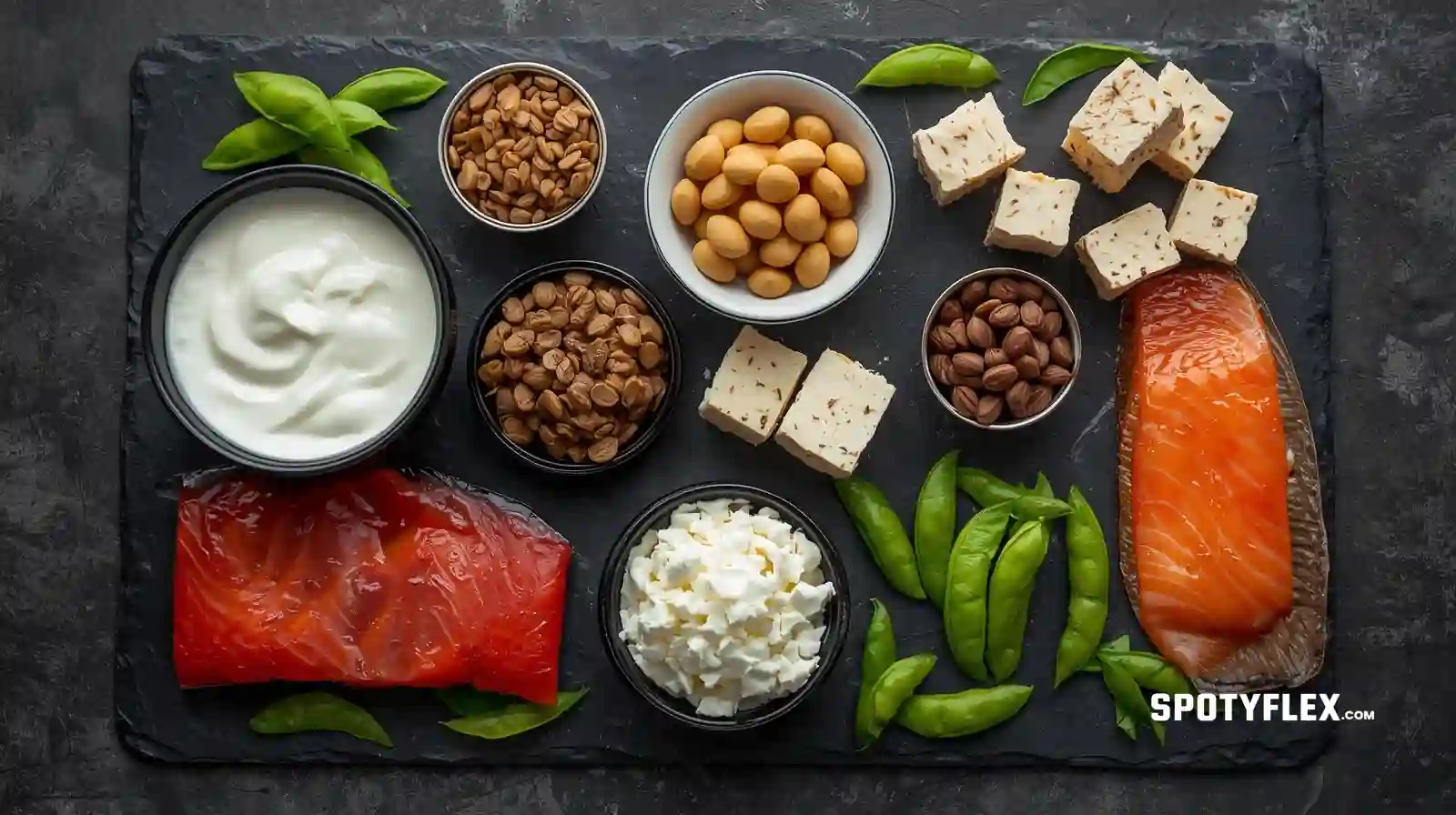
At some point, someone told you to "eat less and move more." Which is technically correct, and also completely useless. It answers nothing. How much less? Less than what? From where do you even start?
That's the question this article actually answers. Not with vague advice, but with a real number — your personal calorie target for fat loss, calculated from scratch, explained in plain language so you understand what you're doing and why.
No app required. No paid subscription. Just the math behind the number, and what to do with it once you have it.
- To lose fat, you need to eat fewer calories than your body burns — this is a calorie deficit
- Your maintenance calories (TDEE) = BMR × activity multiplier
- A moderate deficit of 300–500 kcal/day produces roughly 0.3–0.5 kg of fat loss per week
- Never go below 1,200 kcal (women) or 1,500 kcal (men) without medical supervision
- If the scale hasn't moved in 2–3 weeks, you've probably adapted — adjust down by 100–150 kcal and reassess
- Hitting your protein target (1.6–2.2g/kg) protects muscle while you're in a deficit
What a Calorie Deficit Actually Is
A calorie is a unit of energy. Your body needs a certain amount of it every day just to exist — to breathe, pump blood, digest food, maintain body temperature, and move around. That number is your maintenance calories, or TDEE (Total Daily Energy Expenditure). It's the exact point where your weight stays stable.
Eat above that number consistently, and your body stores the surplus as fat. Eat below it consistently, and your body starts burning stored fat to make up the difference. That's the entire mechanism of fat loss. Every diet — keto, intermittent fasting, low-fat, high-protein — works when it works because it puts you in a calorie deficit. The diet is the vehicle. The deficit is the engine.
Understanding this matters because it stops you chasing the wrong thing. You don't need a specific diet. You don't need to cut carbs or eat at specific times or avoid certain foods. You need to eat fewer calories than you burn — and do it in a way you can sustain for weeks and months, not days.
Step 1 — Find Your TDEE
Before you can set a deficit, you need to know your starting point: how many calories your body burns on an average day. This is your TDEE. It has two components — your BMR, and an activity multiplier applied on top.
First: calculate your BMR
Your Basal Metabolic Rate (BMR) is the number of calories your body burns at complete rest — just to keep you alive. The most widely validated formula for calculating it is the Mifflin-St Jeor equation, which outperforms older formulas like Harris-Benedict in accuracy across most populations.
Women: (10 × weight kg) + (6.25 × height cm) − (5 × age) − 161
Then: multiply by your activity level
Your BMR only covers resting metabolism. Every step you take, every workout, and even the energy used to digest food adds to your total burn. To get your TDEE, multiply your BMR by the activity factor that best matches your real daily life — not the life you aspire to.
| Activity Level | Description | Multiplier |
|---|---|---|
| Sedentary | Desk job, little or no exercise | × 1.2 |
| Lightly active | Light exercise 1–3 days/week | × 1.375 |
| Moderately active | Moderate exercise 3–5 days/week | × 1.55 |
| Very active | Hard exercise 6–7 days/week | × 1.725 |
| Extra active | Physical job + hard daily training | × 1.9 |
If maths isn't your thing, our TDEE calculator guide walks through this with an interactive tool you can use right now.
Step 2 — Set Your Deficit
Once you know your TDEE, setting your calorie target for fat loss is simple: subtract a deficit from it. The question is how big that deficit should be.
Bigger deficits produce faster weight loss on paper — but they come with real costs. Too aggressive and you lose muscle alongside fat, your energy tanks, hunger becomes unmanageable, and compliance collapses within weeks. The research is clear: moderate, sustainable deficits produce better body composition outcomes over time than aggressive short cuts.
A Real Worked Example
Let's run this for a real person so the numbers become concrete.
Profile: Male, 30 years old, 80 kg, 178 cm tall. Works a desk job, trains in the gym 3 times a week.
Expected result: roughly 0.35–0.45 kg of fat loss per week, assuming accurate tracking and consistent adherence. Over 12 weeks, that's 4–5 kg — entirely realistic without crash dieting, starvation, or eliminating any food group.

Why Most People Get This Wrong
The formula is simple. The execution trips people up in a few predictable ways.
Underestimating how much they're eating
Studies consistently show that people underreport their calorie intake by 20–40%. Not because they're lying — because estimating portions is genuinely hard. A tablespoon of olive oil "eyeballed" is often two tablespoons, which is an extra 120 kcal you didn't account for. A handful of mixed nuts is 200+ kcal that rarely gets logged. If you're eating at a deficit on paper but the scale isn't moving, this is the first place to look. Weighing food for even two weeks builds a calibration that changes how you estimate forever.
Setting the deficit too aggressively from day one
Starting with a 1,000 kcal deficit because you want faster results almost always backfires. Hunger spikes, performance tanks, adherence falls apart within two to three weeks, and you end up back where you started having lost mostly water weight and some muscle. A slower deficit you can maintain for three months beats an aggressive one you quit after three weeks every time.
Not protecting protein
Cutting calories without hitting your protein target is the fastest route to losing muscle instead of fat. In a deficit, your body looks for energy anywhere it can find it — including breaking down muscle tissue. High protein intake (1.6–2.2g/kg) combined with resistance training sends a strong signal to preserve muscle while burning fat. Cutting calories and protein simultaneously undermines the whole point.
Treating weekends as separate from the week
A 500 kcal deficit Monday through Friday followed by a 1,000 kcal surplus Saturday and Sunday doesn't produce fat loss — it produces a net weekly surplus. Your body doesn't reset at midnight on Friday. Calorie balance is cumulative. Weekends count.
How to Adjust When Progress Stalls
Here's something nobody tells you upfront: the calorie target you calculate today will stop working eventually. Not because the formula was wrong, but because your body adapts.
As you lose weight, your BMR decreases — you're a lighter person burning fewer calories at rest. On top of that, metabolic adaptation means your body becomes more efficient during exercise and reduces non-exercise movement (fidgeting, spontaneous walking) without you noticing. The result is that a deficit that produced 0.4 kg/week in month one might produce 0.1 kg/week in month three on the same calories.
This isn't a reason to panic or crash your calories. It's a signal to make a small, calculated adjustment.

The Bottom Line
How many calories should you eat to lose weight? Here's your answer: calculate your TDEE using the Mifflin-St Jeor formula and your real activity level, then subtract 300–500 kcal. That's your number. That's where you start.
Everything else — the specific diet, the meal timing, the foods you include or avoid — is secondary to that number. Build your eating around a calorie target that creates a real deficit, protect your protein intake, and give it time. The math works. Most people just never calculate it properly to begin with.
If the scale stops moving, recalculate. If you've lost 5 kg, your TDEE has changed — run the numbers again with your new weight. Treat it like a living calculation, not a one-time event.
2. Multiply by your activity level to get TDEE
3. Subtract 300–500 kcal to set your daily target
4. Eat 1.6–2.2g protein per kg of bodyweight
5. Reassess every 3–4 weeks and adjust if needed
- Mifflin MD, et al. (1990). A new predictive equation for resting energy expenditure in healthy individuals. American Journal of Clinical Nutrition, 51(2), 241–247. pubmed.ncbi.nlm.nih.gov
- Hall KD, et al. (2012). Quantification of the effect of energy imbalance on bodyweight. The Lancet, 378(9793), 826–837. pubmed.ncbi.nlm.nih.gov
- Helms ER, et al. (2014). Evidence-based recommendations for natural bodybuilding contest preparation. Journal of the International Society of Sports Nutrition, 11, 20. pubmed.ncbi.nlm.nih.gov
- Byrne NM, et al. (2018). Intermittent energy restriction improves weight loss efficiency in obese men. International Journal of Obesity, 42(2), 129–138. pubmed.ncbi.nlm.nih.gov
- Dhurandhar EJ, et al. (2015). Self-reported eating much less than intake estimated from doubly labelled water in four populations. European Journal of Clinical Nutrition, 69(10), 1082–1088. pubmed.ncbi.nlm.nih.gov
Younes is the founder and content creator behind SpotyFlex — a fitness blog built on the principle that real training knowledge shouldn't be buried under bro-science and filler. He covers nutrition, body composition, and strength training with a focus on what the research actually supports.