



Let's be real for a second.
Most people don't fail fat loss because they're "lazy." They fail because they're guessing. And when it comes to calories, guessing is not a strategy.
If you've ever typed your stats into three different calculators and gotten three different calorie numbers… welcome to the club. That's because your TDEE (Total Daily Energy Expenditure) isn't some magical fixed number. It's more like a moving target.
So let's break this down like we're talking over coffee.
First: What Is TDEE Anyway?
Your Total Daily Energy Expenditure (TDEE) is just a fancy way of saying:
"How many calories do I burn in a full day?"
That includes:
Simple in theory. Messy in real life.
Why Online Calculators Feel So Random
Ever notice how one calculator says 2,200 calories and another says 2,700?
That's a 500-calorie difference. That's not small. That's the difference between losing fat… and accidentally bulking.
Most calculators use the Mifflin-St Jeor equation, considered the gold standard for estimating metabolism.
It uses your:
It calculates your BMR (Basal Metabolic Rate) — how many calories you'd burn doing absolutely nothing.
But that's only part of your TDEE.
The 4 Things That Actually Make Up Your TDEE
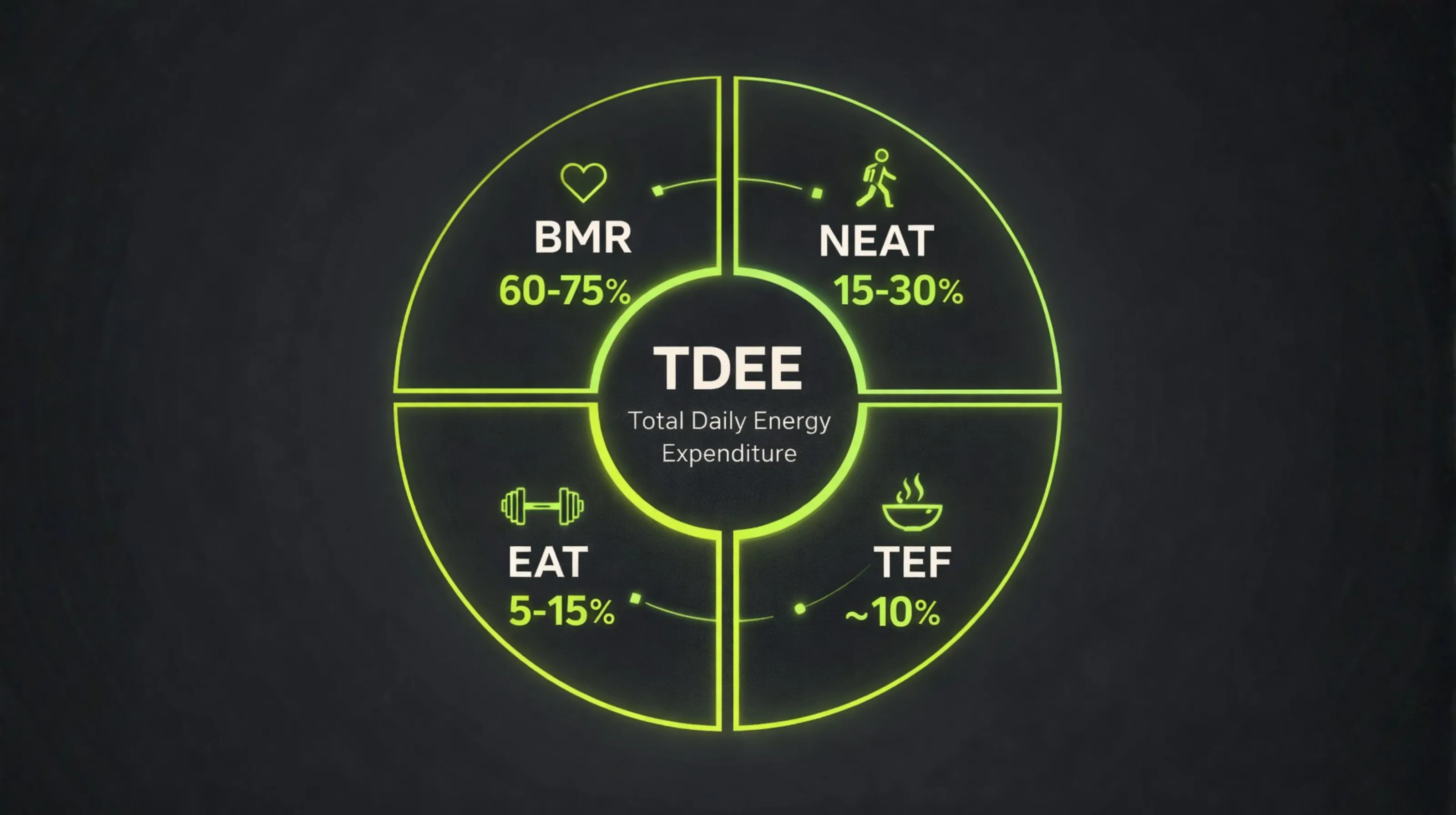
1. BMR (60–75%)
Your baseline. Just staying alive.
2. NEAT (15–30%)
Non-Exercise Activity Thermogenesis. All your random daily movement — walking, cleaning, pacing, fidgeting. This varies a LOT between people.
3. TEF (~10%)
Thermic Effect of Food. Your body burns calories digesting food. Protein burns the most.
4. EAT (5–15%)
Exercise Activity Thermogenesis. Surprisingly, workouts are usually the smallest part.
So… Which Formula Should You Use?
If you're a regular gym-goer, Mifflin-St Jeor works well for most people.
If you know your body fat percentage, Katch-McArdle can be even more accurate because it uses lean mass.
But remember — these are still estimates. Even the best formula can be off by 10–15%.
The Only Way to Find Your "True" TDEE
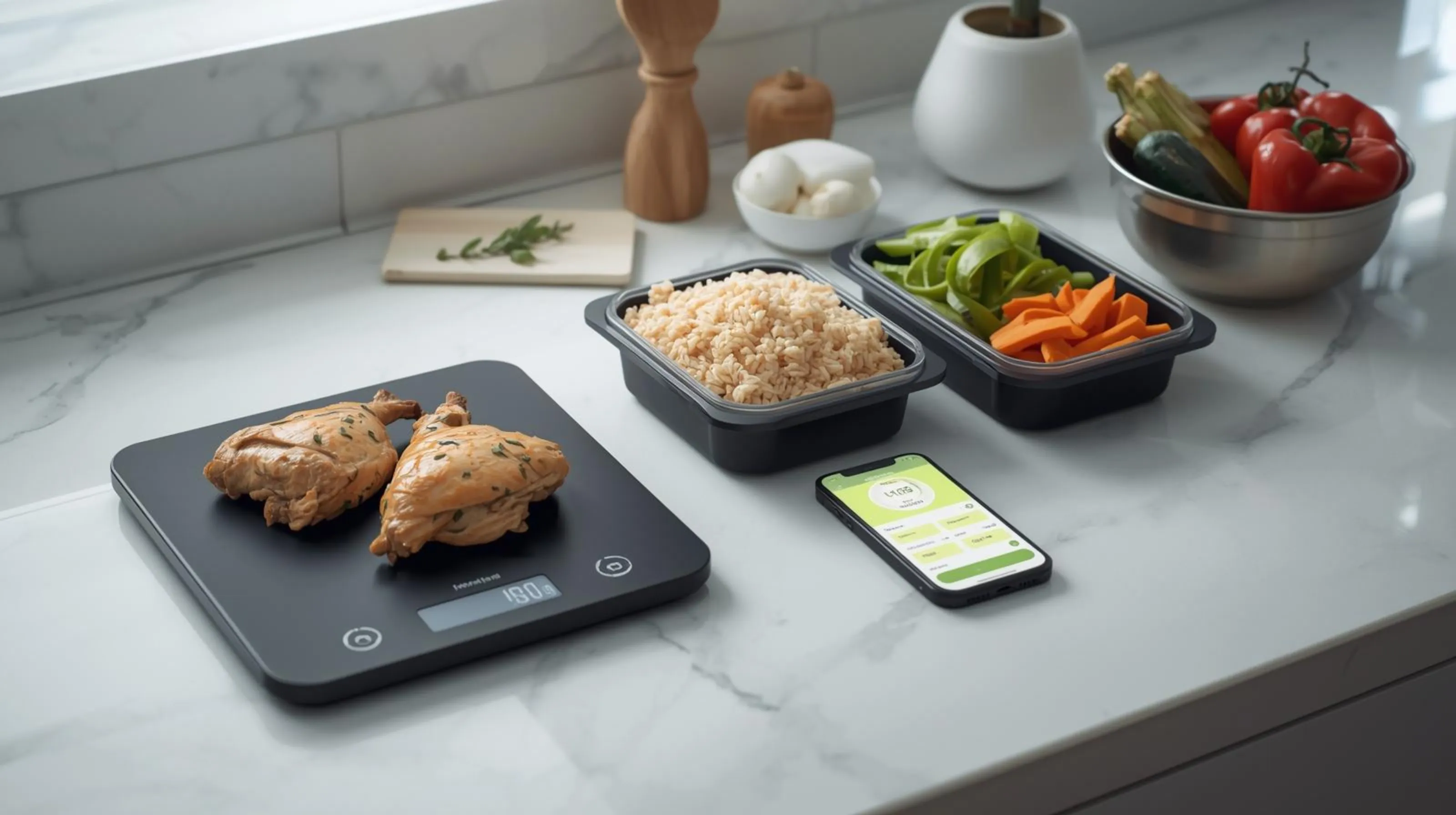
The only way to find your real TDEE is through tracking.
Step 1: Track Everything
Use a digital food scale. Eyeballing peanut butter is how people accidentally eat 400 calories.
Step 2: Weigh Yourself Daily
Don't panic about daily fluctuations. Focus on weekly averages.
Step 3: Watch the Trend for 2–3 Weeks
Adjusting Your TDEE for Your Goal
Maintenance
Eat around your TDEE. Stable weight. Chill mode.
Fat Loss
Go 15–20% below your TDEE (or 500–750 calories lower).
Muscle Gain
Add 200–300 calories above your TDEE. Small surplus = less fat gain.
Calories Matter… But Macros Matter Too
Protein helps preserve muscle, keeps you full, and increases calorie burn. If you're not sure how much you need, check our complete protein guide.
Quick FAQ
Final Thoughts
Your TDEE isn't mysterious. It's data.
Stop guessing. Start tracking. Adjust based on your goal. Stay consistent.
That's the whole game.
Ready to stop guessing?
Your TDEE isn't mysterious. It's data. Stop guessing. Start tracking. Adjust based on your goal. Stay consistent.
- Mifflin MD, et al. A new predictive equation for resting energy expenditure in healthy individuals. PubMed — American Journal of Clinical Nutrition, 1990
- Levine JA. Non-exercise activity thermogenesis (NEAT). PubMed — Best Practice & Research: Clinical Endocrinology & Metabolism, 2002
- Paddon-Jones D, et al. Protein, weight management, and satiety. PubMed — American Journal of Clinical Nutrition, 2008
- Hall KD, Kahan S. Maintenance of lost weight and long-term management of obesity. PubMed — Medical Clinics of North America, 2018
Younes Ouba
Founder of SpotyFlex, Full-Stack Developer & lifelong fitness enthusiast. I build the platform and the content. The goal is always the same: real fitness knowledge, zero BS.

/1.webp)
