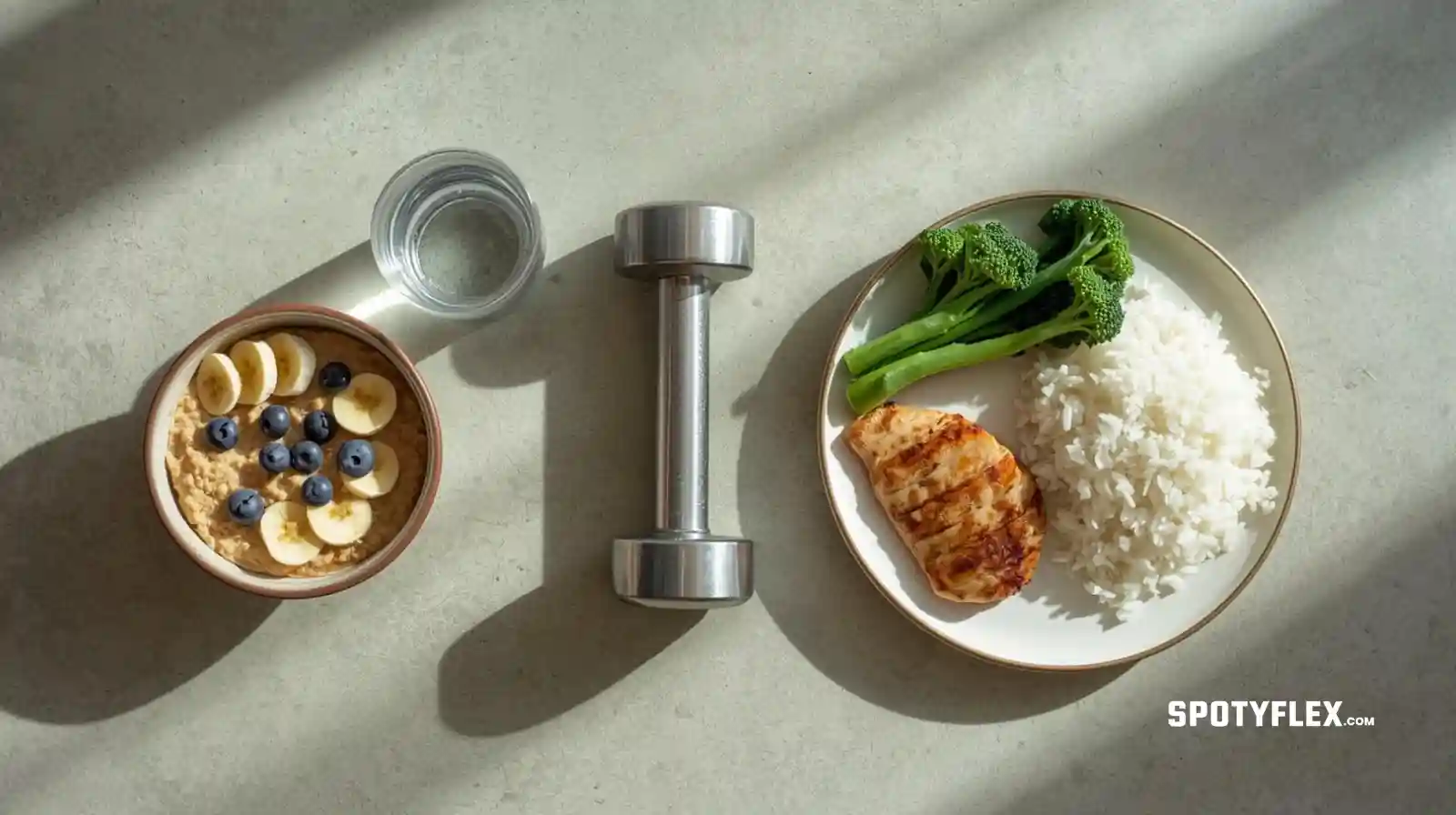
Someone, at some point, told you that you had to eat protein within 30 minutes of finishing your workout — or you'd basically wasted the whole session. The anabolic window. It was everywhere in the 2000s, plastered across every tub of whey protein like a countdown clock. Miss it and your gains evaporate. Better chug that shake in the parking lot.
The research doesn't support it. Not even close.
But here's what's interesting: dismissing the anabolic window doesn't mean workout nutrition doesn't matter. It does. What you eat before and after training genuinely shapes your performance, your recovery, and your body composition over time — it just doesn't work the way the supplement industry convinced you it did. This guide cuts through the noise and gives you something actually useful: what the evidence says, translated into flexible, human-friendly guidelines.
- The "30-minute anabolic window" is largely a myth — the real window is 3–5 hours around your training
- Pre-workout: eat a mixed meal with protein and carbs 1–3 hours before you train for best performance
- Post-workout: get 20–40g of protein within a couple of hours after training — timing matters more if you trained fasted
- Fasted training is fine; just don't skip post-workout protein if you do it regularly
- Total daily protein (1.6–2.2g/kg) matters more than any individual meal timing strategy
- Caffeine is the one pre-workout ingredient with real, consistent evidence behind it
The Anabolic Window — What's Actually True
The anabolic window concept was simple and scary: there's a short, critical period right after your workout where your muscles desperately need protein. Miss it, and the session was pointless. The supplement industry loved this idea because it meant every gym-goer needed a ready-to-drink shake in their gym bag.
The problem is that when researchers actually tested this rigorously, the story fell apart. A comprehensive review by Aragon and Schoenfeld (2013) in the Journal of the International Society of Sports Nutrition concluded that the post-exercise window for protein is far wider than anyone was claiming — likely 3–5 hours around training, not 30 minutes. And crucially, how urgent that window is depends almost entirely on when you last ate.
If you trained first thing in the morning with nothing in your stomach, or it's been more than four hours since a proper meal, then yes — getting protein in relatively soon after matters more. But if you ate a decent meal with protein an hour or two before your session? That food is still digesting. Amino acids are still entering your bloodstream. The window is already covered before you even finish your last set.
Pre-Workout Nutrition — What, How Much, How Early
Pre-workout nutrition has two jobs: give you fuel for the session, and make sure amino acids are already circulating when training kicks off. Both of these are best handled with a solid meal containing protein and carbohydrates, eaten 1–3 hours before you train. Not a shake you gag down in the car, and not a full Sunday roast 20 minutes before squats — something in between.
Carbohydrates — your primary fuel for lifting
High-intensity resistance training runs almost entirely on carbohydrates. Specifically, it burns through glycogen stored in your muscles. If you're training in a depleted state — no carbs beforehand, or coming off a long fast — your glycogen stores are low, and your performance will reflect that. You'll tire faster, you'll move less weight, and high-volume sessions will fall apart earlier than they should.
Eating carbohydrates 1–3 hours before training keeps those stores topped up. You don't need a huge amount — aim for 30–60g of carbohydrates depending on how long and intense the session is. Leg day warrants more than a 20-minute upper body finisher.
Protein — priming the response before it starts
Having protein before training means amino acids are already in your system when you're actually lifting. The muscle protein synthesis response starts sooner, and you're not sitting at zero when the session ends. A pre-workout meal with 20–40g of protein gets this done cleanly.
Target: 20–40g protein, 1–3 hours before training.
Fat — keep it low close to training
Fat slows gastric emptying — the rate at which food leaves your stomach. That's generally fine, but not ideal right before a session. A high-fat meal eaten an hour before training can leave you feeling sluggish, slow down carbohydrate delivery, and cause real digestive discomfort mid-set. Save the heavier meals for earlier in the day or post-workout. In the immediate pre-training window, keep fat low.
| Timing before training | Meal type | Example |
|---|---|---|
| 3–4 hours before | Full mixed meal — protein + carbs + moderate fat | Chicken breast, rice, broccoli |
| 1–2 hours before | Moderate meal — protein + carbs, low fat | Greek yogurt + fruit, or rice cakes with turkey |
| 30–60 minutes before | Small, easily digested — mostly carbs | Banana, rice cake, small piece of fruit |
| Less than 30 minutes | Fast-digesting carbs only if needed | Sports drink, gel, small banana |

Post-Workout Nutrition — The Actual Priority
After training, your muscles have taken a beating — in the good way. Muscle fibres are damaged and in repair mode, glycogen stores are partially depleted, and the protein synthesis machinery is running hot. This is when a post-workout meal earns its keep. Not in a panic-get-protein-in-30-minutes way, but in a get-a-solid-meal-within-a-couple-of-hours way.
Protein — the non-negotiable
Post-workout protein is the most consistently supported nutritional intervention for muscle growth and recovery. The target is 20–40g of high-quality protein — meaning a protein that contains all the essential amino acids your body can't make on its own.
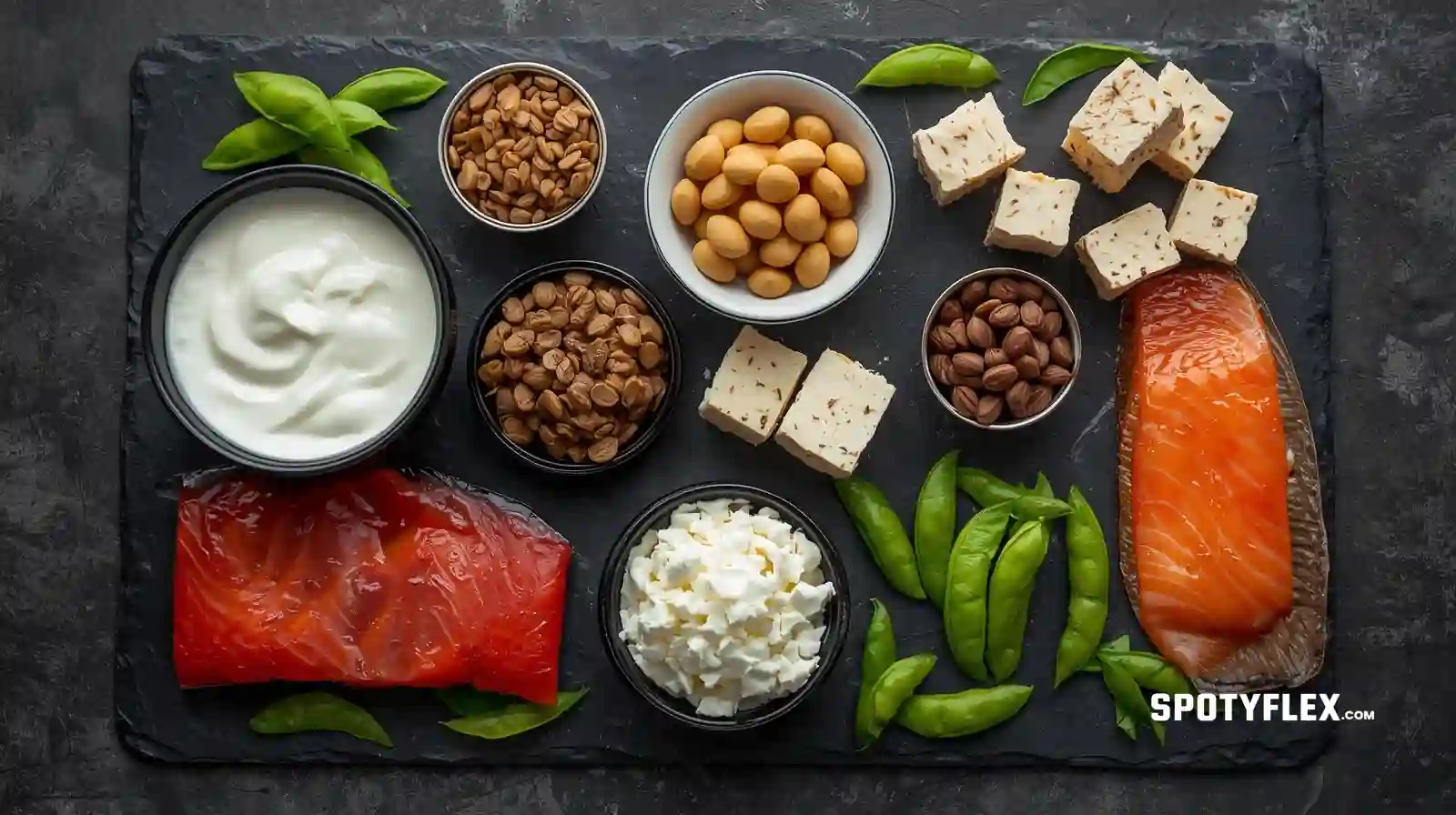
The amino acid that matters most here is leucine. It acts as the trigger for muscle protein synthesis — cross a certain leucine threshold and the signal fires. Whey protein, eggs, chicken, fish, and Greek yogurt are all high in leucine per gram. If you eat primarily plant-based, you can still hit the same threshold — you'll just need slightly larger servings or to pair complementary sources. Tofu + tempeh, or a well-rounded plant protein blend with added leucine, get the job done.
Carbohydrates — for your next session, not this one
Post-workout carbohydrates replenish the glycogen you burned. If you train once a day with a normal amount of rest between sessions, this isn't urgent — your body will refill glycogen stores with the carbs you eat over the next 24 hours. Panic-eating rice immediately after training isn't necessary.
The one exception: if you train twice a day, post-workout carbohydrates become a genuine priority. You need to restock faster because the next session is only hours away.
Training Fasted — Is It a Problem?
A lot of people train early in the morning without eating first. Some do it because intermittent fasting fits their schedule, some because eating before training makes them feel sick, and some because they genuinely just aren't hungry at 6am. The question is whether this compromises their training or their gains.
For performance: Fasted training does produce small reductions in output for heavy, high-volume sessions. The reason is straightforward — glycogen availability is lower. For shorter moderate sessions, the drop is minimal and most people won't notice it. If you're consistently doing heavy leg days or high-volume bodybuilding-style training first thing with nothing in your stomach, eating something beforehand is probably worth getting used to. But if your morning sessions are relatively brief, fasted is fine.
For muscle growth: The issue with fasted training isn't the training itself — it's what happens after. If you train in a complete fast and then delay eating for another two or more hours, you've gone a long time without amino acids hitting your muscles. The fix is simple: get 20–40g of protein into your system relatively soon after the session, even if it's just a shake before your main breakfast arrives later.
Pre-Workout Supplements — What Works and What Doesn't
Walk into any supplement store and the pre-workout section will try to overwhelm you — dozens of products with names like "ANNIHILATE" and "FURY BLAST" and enough proprietary blend buzzwords to fill a dictionary. Most of it is noise. Here's what the evidence actually shows:
Why Total Daily Intake Beats Perfect Timing
Every meta-analysis and systematic review on nutrient timing eventually comes back to the same conclusion: total daily protein and calorie intake has a far greater effect on muscle gain and fat loss than any specific meal timing strategy. Getting 160–220g of protein per day consistently — for an 80kg person — is more important than whether any given gram of protein came in at 6:30pm versus 7:15pm.
Timing isn't irrelevant. The margins are just smaller than the fitness industry has always implied. Think of it this way: if your total daily nutrition is dialled in and you happen to eat well-timed meals around training, you might squeeze out a few extra percent of results over months. If your total nutrition is a mess but you nail your post-workout shake every single day, you're optimising the wrong thing.
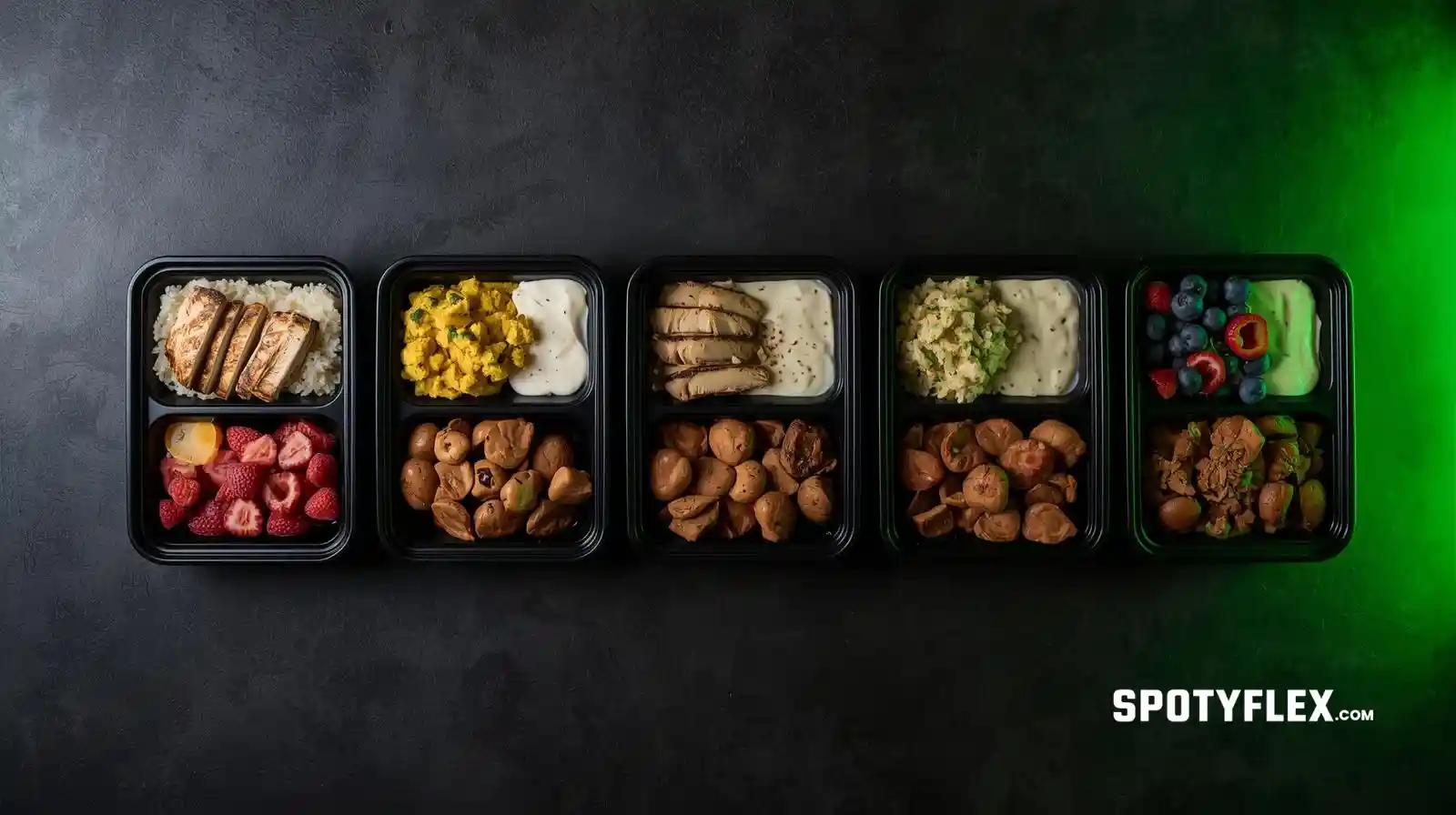
Build the foundation first. Then layer timing on top.
2nd: Eat a balanced meal 1–3 hours before training
3rd: Get 20–40g protein after training, within a few hours
4th: Use caffeine 30–60 minutes before hard sessions if you want an edge
5th: Spread your protein across 3–5 meals throughout the day
The Bottom Line
Pre and post-workout nutrition matters — genuinely. But not in the panicked, countdown-clock way that supplement marketing has trained people to think about it. A protein-and-carb meal 1–3 hours before your session and another protein-containing meal within a couple of hours after training covers practically everything the evidence actually supports. The 30-minute window was marketing, not physiology.
If you train fasted, eat your post-workout protein. If you can eat before training, do it. Don't delay your post-workout meal by hours for no reason. But beyond that? Training consistently, sleeping, and eating enough total protein across the day is worth infinitely more than obsessing over the exact timestamp of your shake.
Get the big things right. The timing details follow naturally.
- Aragon AA, Schoenfeld BJ. (2013). Nutrient timing revisited: is there a post-exercise anabolic window? Journal of the International Society of Sports Nutrition, 10(1), 5. pubmed.ncbi.nlm.nih.gov
- Schoenfeld BJ, et al. (2017). Pre- versus post-exercise protein intake has similar effects on muscular adaptations. PeerJ, 5, e2825. pubmed.ncbi.nlm.nih.gov
- Guest NS, et al. (2021). International Society of Sports Nutrition position stand: caffeine and exercise performance. Journal of the International Society of Sports Nutrition, 18(1), 1. pubmed.ncbi.nlm.nih.gov
- Morton RW, et al. (2018). A systematic review, meta-analysis and meta-regression of the effect of protein supplementation on resistance training-induced gains in muscle mass and strength. British Journal of Sports Medicine, 52(6), 376–384. pubmed.ncbi.nlm.nih.gov
Younes is the founder and content creator behind SpotyFlex — a fitness blog built on the principle that real training knowledge shouldn't be buried under bro-science and filler. He covers nutrition, body composition, and strength training with a focus on what the research actually supports.