

In short: It is common to feel sore after a new or hard workout. Soreness does not mean the workout worked better. Start with a small amount of exercise and build up over time. How you feel and move can help you decide what to do next.
What causes muscle soreness
Muscle soreness that starts hours after exercise is often called DOMS. That stands for delayed onset muscle soreness. It often happens after a new workout, doing more than usual, or trying a new movement.
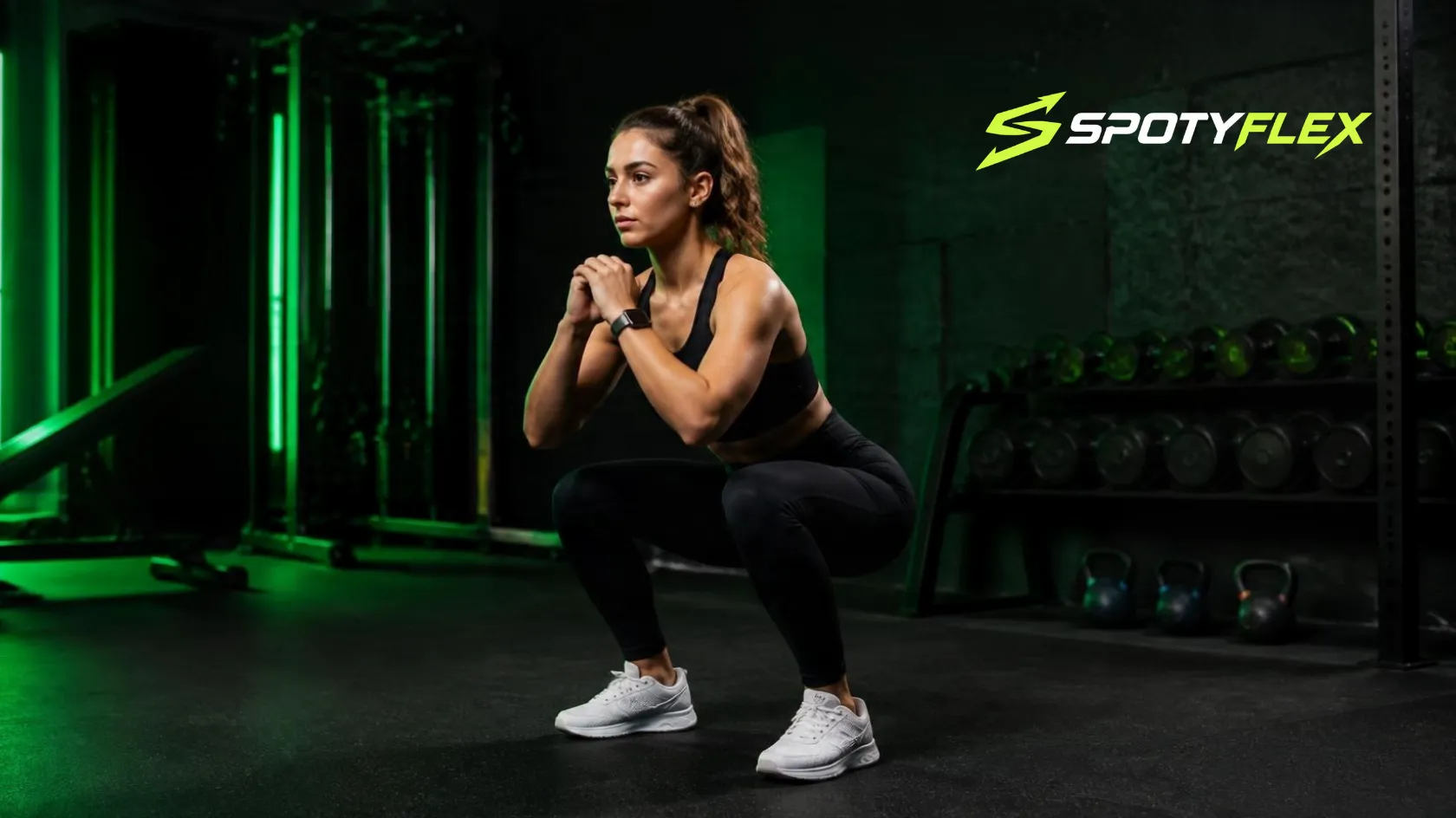
You may feel it more after movements where your muscles work as they lengthen. For example, your legs work while you lower into a squat. Soreness often starts the next day. It can last for a few days, but it is different for everyone. It cannot tell you exactly how much your muscles were affected. [1, 2]
Soreness that starts the next day is not the same as the burn you feel during a hard set. It is also not caused by lactic acid sitting in your muscles. Scientists are still studying why DOMS happens, so be careful of anyone claiming there is one simple cause. [1]
What soreness tells you
Soreness can happen after a new or hard workout. But it does not mean you had a better workout, and you do not need to feel sore to get stronger. People often feel less sore as they get used to the same exercises. In a review of studies, people felt less sore after doing a similar workout a second time. [3]
Do not add extra exercises just to make yourself sore. That can make it harder to recover and stick with your plan. A workout you can repeat is more useful than one that leaves you unable to move comfortably.
A better way to track progress
Notice if you can lift a little more, do another rep, or use better form over time. Do not use next-day soreness as your score.
Start with less than you think you can do
Starting a new routine? Coming back after a break? Try a few exercises and sets first. Pick a weight you can lift with good form. You do not have to do as much as possible on day one.
Give yourself time to get used to the exercises. Then add a little more when you feel ready. Studies show that people often feel less sore the next time they do a similar workout. That does not mean soreness will always go away, or that there is one perfect plan for everyone. [3]
You do not need to slow every movement down. Just move in a way you can control, keep good form, and make small changes to your workout over time.
Ways to feel more comfortable
There is no quick fix that makes soreness disappear. Give your body time. Eat and drink as you normally would, and try to get enough sleep. Gentle movement may help you feel looser for a while, but that does not mean your muscles have fully recovered.
If you enjoy massage, it may help a little with soreness. A review of studies found small improvements in soreness and flexibility, but no clear improvement in strength or sports performance. Think of massage as a way to feel more comfortable, not a shortcut to better results. [4]
Stretching can feel good, but it does not do much to prevent or ease soreness. A Cochrane review found that stretching before or after exercise did not make a meaningful difference to DOMS. [5]

Keep recovery simple
Rest, easy daily movement, regular meals, and sleep are a good place to start. You do not need a special gadget or another hard workout to recover.
Can you work out while sore?
Often, yes. If the soreness is mild and you can move as usual, you can work out. You could also train a different part of your body or make the session easier.
If you feel weak or cannot move as far as usual, use less weight or skip that exercise. Do the same if soreness changes your form. A hard workout may ease soreness for a short time. That does not mean your muscles are ready for another hard session. [2]
If you are not sure, take an easy walk or have a rest day. Go back to your usual workout when you can move comfortably. Do not try to make up for missed workouts all at once.
When to get medical help
Normal soreness usually starts later and affects the muscles you worked. Stop exercising if you get sharp pain during a movement, a lot of swelling, joint pain, or pain that keeps getting worse. Talk to a health professional.
Get urgent medical care
Very bad muscle pain, unusual weakness, or dark urine after exercise can point to a serious problem called rhabdomyolysis. Trouble doing normal tasks is another warning sign. Get medical help right away. [6]
Common questions about sore muscles
Does soreness mean my workout worked?
No. You can get stronger without feeling sore. Keep track of your exercises and how much you lift, not how sore you feel the next day.
Will stretching stop the soreness?
Stretch if it feels good, but it probably will not stop the soreness. Studies have not found a meaningful effect. [5]
Can I exercise when I am sore?
If the soreness is mild and you can move normally, you can usually exercise. Keep it easy or work a different part of your body. If you feel weak or have trouble moving, rest that area.
How long will I be sore?
It is different for everyone, but mild soreness often goes away in a few days. Get medical help if the pain is very bad, gets worse, or comes with dark urine or unusual weakness.
You do not need to chase soreness or fear it. Start small, give yourself time to recover, and keep at it.
Sources
- Miles MP, Clarkson PM. Exercise-induced muscle pain, soreness, and cramps. Journal of Sports Medicine and Physical Fitness. 1994;34(3):203-216. PubMed PMID: 7830383.
- Cheung K, Hume P, Maxwell L. Delayed onset muscle soreness: treatment strategies and performance factors. Sports Medicine. 2003;33(2):145-164. doi:10.2165/00007256-200333020-00005.
- Doma K, Matoso B, Protzen G, et al. The repeated bout effect of multiarticular exercises on muscle damage markers and physical performances: a systematic review and meta-analyses. Journal of Strength and Conditioning Research. 2023;37(12):2504-2515. doi:10.1519/JSC.0000000000004628.
- Davis HL, Alabed S, Chico TJA. Effect of sports massage on performance and recovery: a systematic review and meta-analysis. BMJ Open Sport & Exercise Medicine. 2020;6(1):e000614. doi:10.1136/bmjsem-2019-000614.
- Herbert RD, de Noronha M, Kamper SJ. Stretching to prevent or reduce muscle soreness after exercise. Cochrane Database of Systematic Reviews. 2011;(7):CD004577. doi:10.1002/14651858.CD004577.pub3.
- National Institute for Occupational Safety and Health. Rhabdomyolysis: signs and symptoms. CDC/NIOSH guidance.