
Stop choosing between lifting and cardio. You don't have to.
For years, the fitness world was split into two camps. The lifters who said cardio was killing their gains. The runners who said weights would make them slow and stiff. Both were wrong. And now in 2026, hybrid training has become the #1 fitness trend for a reason — it works better than doing either alone.
Whether your goal is to lose fat, build muscle, run faster, or just not get winded climbing stairs, hybrid training is the most efficient system you can follow. Let's break it down completely.
What Is Hybrid Training, Exactly?
Hybrid training is a structured program that combines strength training, cardiovascular conditioning, and mobility work into a single training system — rather than treating them as separate goals.
"You're not a powerlifter. You're not a marathoner. You're a human who wants to be strong AND not die on a hike."
A hybrid athlete can squat serious weight on Monday and run 10km on Wednesday. They're not elite at either discipline. But they're significantly better at both than someone who only trains one. And in terms of health markers — body composition, cardiovascular fitness, longevity — they often outperform specialists.
The Interference Effect: The One Thing Holding People Back
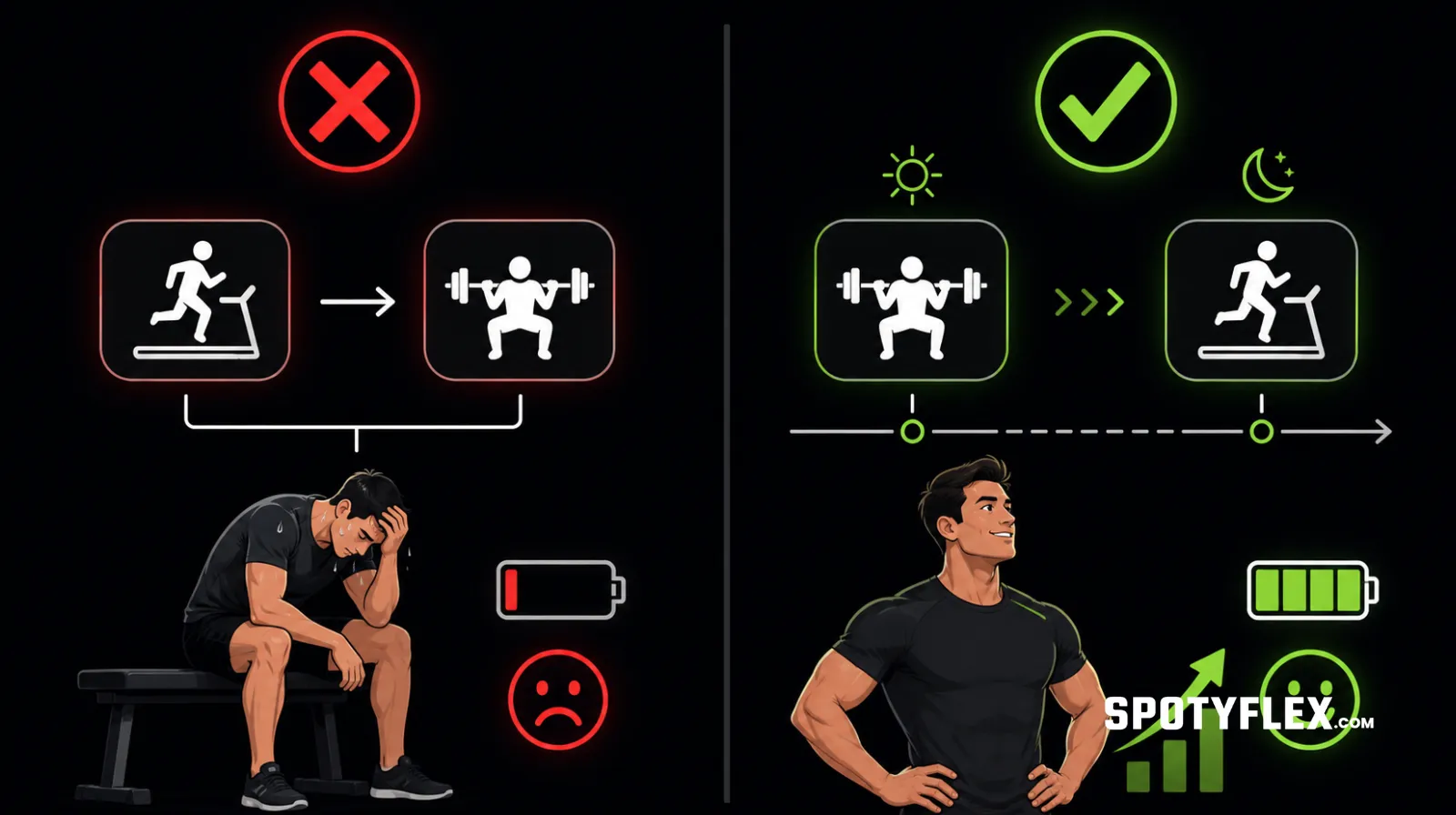
There's a real scientific phenomenon called the interference effect — where endurance training can blunt muscle and strength adaptations if programmed carelessly. This is what people mean when they say "cardio kills gains."
But here's what they don't tell you: the interference effect is avoidable. The research shows it mainly occurs when:
Fix the sequencing and volume, and the interference effect basically disappears. Studies show that separating strength and cardio sessions by at least 6 hours minimizes any negative overlap. And Zone 2 cardio (low intensity, conversational pace) has almost zero interference with muscle growth at moderate volumes.
Why Hybrid Training Hits Different in 2026
Hybrid training has exploded because people are finally tired of one-dimensional goals. Here's what you actually gain when you commit to it properly:
Better Body Composition
Combining resistance training with aerobic work is the most effective strategy for simultaneously reducing body fat and building lean muscle. You're hitting fat loss from two angles at once — higher TDEE from muscle mass AND calories burned during cardio sessions. If you want to understand the fat loss side more deeply, check our complete fat loss guide.
Stronger Cardiovascular Health
Zone 2 cardio builds your aerobic base — your mitochondrial density goes up, your resting heart rate drops, and recovery between sets gets noticeably faster. Your strength sessions will feel easier within 4–6 weeks of adding cardio.
Injury Resilience
Most injuries happen from repetitive stress in a single movement pattern. Hybrid training forces variety. You're not squatting 5 days a week. You're also not running 60 miles a week. The body adapts across multiple systems, reducing overuse injuries dramatically.
Longevity That Actually Matters
Research increasingly points to muscle mass and cardiovascular fitness as the two strongest predictors of long-term health outcomes. Hybrid athletes optimize both. This isn't just about looking good — it's about being functional and capable at 60, 70, and beyond.

The 5-Day Hybrid Training Template
Here's a proven starting framework. Adjust volume up or down based on your training age, recovery, and how much soreness you're accumulating week to week.
The key principles baked into this template:
If you're a beginner, drop one cardio day and replace it with rest. Build up the volume gradually. And dial in your calories — for muscle gain, read our muscle gain hub, or for fat loss check the fat loss hub.
The 4 Mistakes That Will Kill Your Hybrid Progress
1. Running Too Hard, Too Often
High-impact running done at high intensity creates the most interference with strength adaptations. If you love running, keep one session hard and one or two sessions slow (Zone 2). Cycling and rowing are your best friends for cardio that doesn't beat up your legs before squat day.
2. Ignoring Nutrition
Hybrid training has a high energy demand. Eating at too aggressive a deficit while running 3 sessions of cardio per week will leave you exhausted, and you'll lose muscle. Match your calorie intake to your output. Use our TDEE calculator to find your real maintenance number first.
3. Skipping Recovery
The hybrid athlete's biggest vulnerability is overtraining — because you're demanding adaptations from multiple systems at once. Protect your sleep. Hit your protein target. Take your rest days seriously. If your resting heart rate is climbing week over week, you're not recovering — cut volume, not effort.
4. No Progressive Structure
Hybrid training still needs progressive overload on the strength side. Don't let cardio additions become an excuse to plateau your lifting. Track your lifts. Add weight or reps consistently. If you need a refresher, our progressive overload guide breaks it down completely.
Quick FAQ
Final Thoughts
Hybrid training isn't a compromise. It's not "a little bit of everything and master of nothing." When you program it correctly, it's the most complete, sustainable, and effective training system for the vast majority of people.
You don't have to choose between being strong and being fit. Build both.
That's the whole point.
Ready to train like a hybrid athlete?
Pick your starting template. Track your lifts. Add your cardio. Protect your recovery. Repeat for 12 weeks and watch what happens to your body.
- McAvoy CR, et al. ACSM's Health & Fitness Journal — Worldwide Fitness Trends 2026. ACSM, 2025
- Wilson JM, et al. Concurrent training: a meta-analysis examining interference of aerobic and resistance exercises. PubMed — Journal of Strength and Conditioning Research, 2012
- Hickson RC. Interference of strength development by simultaneously training for strength and endurance. PubMed — European Journal of Applied Physiology, 1980
- Leveritt M, et al. Concurrent strength and endurance training: a review. PubMed — Sports Medicine, 1999
Younes Ouba
Founder of SpotyFlex, Full-Stack Developer & lifelong fitness enthusiast. I build the platform and the content. The goal is always the same: real fitness knowledge, zero BS.